The Functional Medicine Blueprint for Real Health
ROOTS VS: Leaves
In the wellness world, it’s easy to get distracted by the newest supplement, peptide, biohack, or skincare trend. But functional medicine consistently returns to one essential truth:
You cannot build vibrant health on weak foundations.
Just like a tree, your body has roots (the fundamentals that determine long-term health) and leaves (the enhancements that can help, but only when the roots are strong).
This Roots vs. Leaves framework simplifies health, reduces overwhelm, and brings you back to the basics your body relies on every day for healing, energy, hormonal balance, detoxification, immune function, and longevity.
Below, we’ll break down the major Roots (your non-negotiables) and the Leaves (your supportive add-ons) using functional and naturopathic medicine principles.
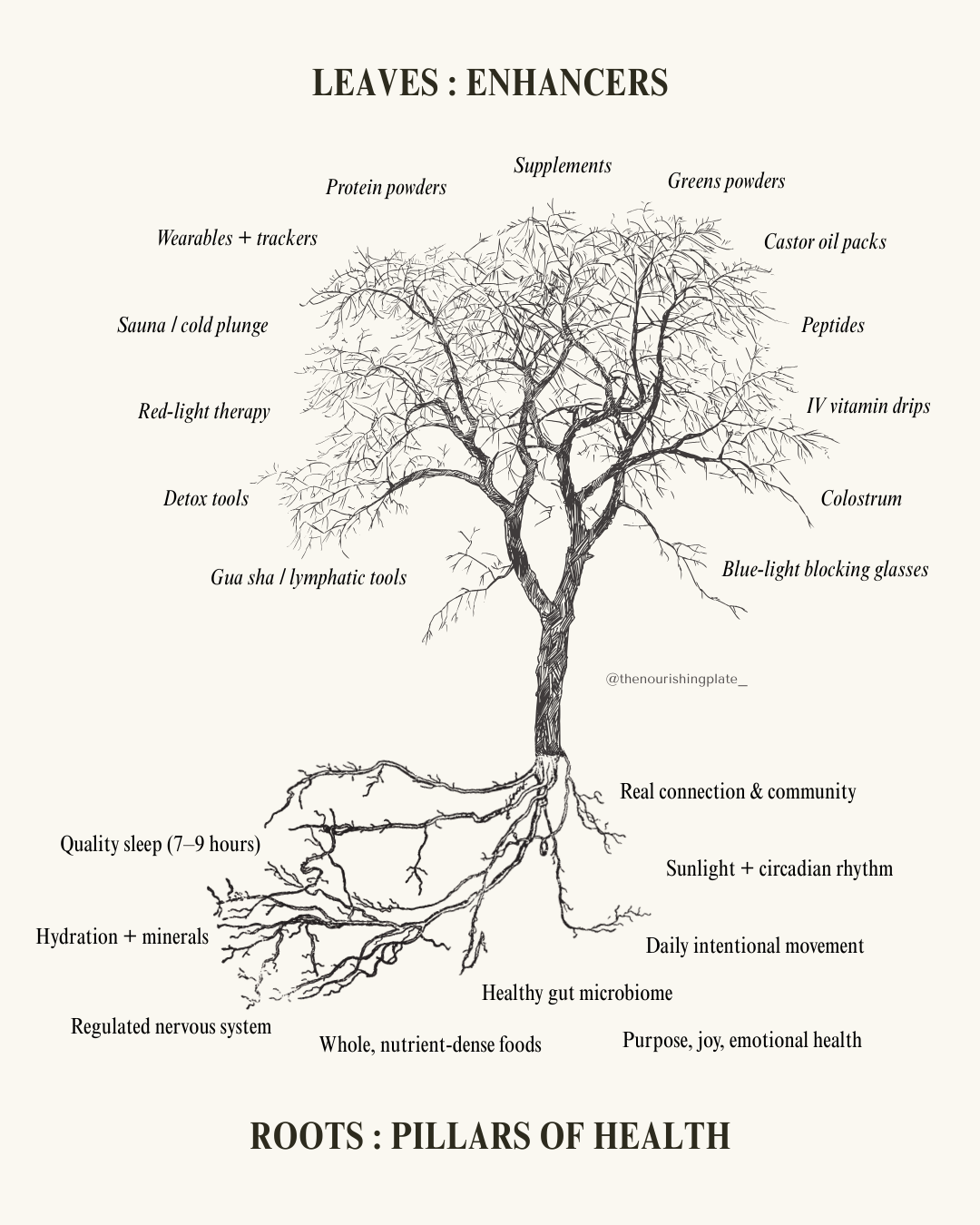
THE ROOTS: Functional Medicine Foundations
These are the biologically essential factors your body depends on. Research across endocrinology, immunology, circadian biology, and psychoneuroimmunology confirms that these areas exert the greatest influence on long-term health outcomes.
1. Whole, Nutrient-Dense Foods
Food is information for your body. Nutrients regulate gene expression, immunity, hormones, and inflammation.
Why it matters:
Supports gut microbiota diversity
Balances blood sugar
Reduces chronic inflammation
Fuels mitochondrial energy production
Tips:
Aim for 6–9 cups of colorful produce daily
Prioritize protein, especially in the morning
Include cruciferous vegetables for detox pathways
Choose whole, unprocessed foods whenever possible
2. Hydration + Minerals
Your body needs water and electrolytes for cellular energy, nerve conduction, detoxification, digestion, and metabolism. Even mild dehydration impacts cognition and hormone regulation.
Tips:
Add mineral drops or electrolytes to 1–2 bottles/day
Drink half your bodyweight (lbs) in ounces of water
Avoid chugging water; sip throughout the day
3. Quality Sleep (7–9 Hours)
Sleep is where repair happens: immune resetting, autophagy, hormone balancing, and neurological restoration.
Tips:
Aim for consistent sleep/wake times
Get morning sunlight within 30 minutes of waking
Reduce blue light 2 hours before bed
Keep your bedroom cool and dark
4. Nervous System Regulation
Your autonomic nervous system influences digestion, hormones, immune response, and inflammation. Chronic stress disrupts all of these.
Tips:
Practice breathwork (4-7-8, physiological sighs)
Create boundaries around work and phone use
Incorporate somatic release practices
Spend time in nature
5. Healthy Gut Microbiome
Approximately 70% of your immune system sits in the gut. The microbiome influences everything from mood to metabolism.
Tips:
Eat a wide variety of plants
Include fermented foods (sauerkraut, kimchi, kefir, yogurt if tolerated)
Avoid unnecessary antibiotics and ultra-processed foods
Manage stress, which directly alters gut bacteria
6. Daily Intentional Movement
Movement is a biological requirement, not optional. It improves lymphatic flow, blood sugar regulation, hormone balance, and mental health.
Tips:
Prioritize walking after meals
Aim for daily mobility work
Strength train 2–3x weekly
Move frequently throughout the day
7. Sunlight + Circadian Rhythm
Light is a major regulator of hormones, sleep, mood, and immune function.
Tips:
Get 5–10 minutes of morning sunlight
Dim lights after sunset
Step outside during mid-day for vitamin D production
8. Real Connection + Emotional Well-Being
Positive social connection and emotional health support longevity, immune strength, and even gene expression.
Tips:
Cultivate relationships that feel emotionally safe
Engage in community (fitness classes, groups, clubs)
Prioritize joy, play, and purpose
Seek support for emotional processing when needed
THE LEAVES: Supportive Enhancers
These can be helpful, but only after the foundations are in place. Without strong roots, leaves don’t create lasting change.
Examples of Leaves include:
• Colostrum - Supports gut and immune health.
• Peptides (BPC-157, MOTS-C, etc.) - Used in advanced healing and metabolic optimization.
• LED Red Light Therapy - Supports skin health, collagen, and mitochondrial function.
• Gua Sha & Lymphatic Tools - Enhances circulation and inflammation resolution.
• Herbal Tinctures - Adaptogens, liver support herbs, gut-healing botanicals.
• IV Infusions - Quick nutrient replenishment when depleted.
• Sauna + Cold Plunge - Hormetic stress to improve detoxification and resilience.
• Non-Toxic Skincare & Beauty Tools - Supports skin barrier and endocrine health.
• Wearables (Oura, Whoop, CGM) - Helpful for self-awareness and fine-tuning habits.
• Gut-Healing Supplements - Glutamine, zinc carnosine, aloe, slippery elm, digestive enzymes.
• Home Wellness Tools - Air purifiers, high-quality water filters, grounding mats.
Leaves are valuable, but they are enhancements, not the foundation.
Putting It All Together: Roots First, Leaves Second
When you nourish the roots, food, sleep, hydration, nervous system health, movement, gut health, sun, and connection, your body becomes naturally more resilient and responsive.
Only then do the leaves (supplements, therapies, biohacks, beauty tools) work as intended.
A strong foundation makes everything else more effective.
Final Takeaway
You don’t need more supplements.
You don’t need more protocols.
You don’t need more complicated wellness routines.
You need stronger roots.
Once the foundations are solid, the leaves can help you flourish.