Histamine Overload
(A Functional Medicine Approach)
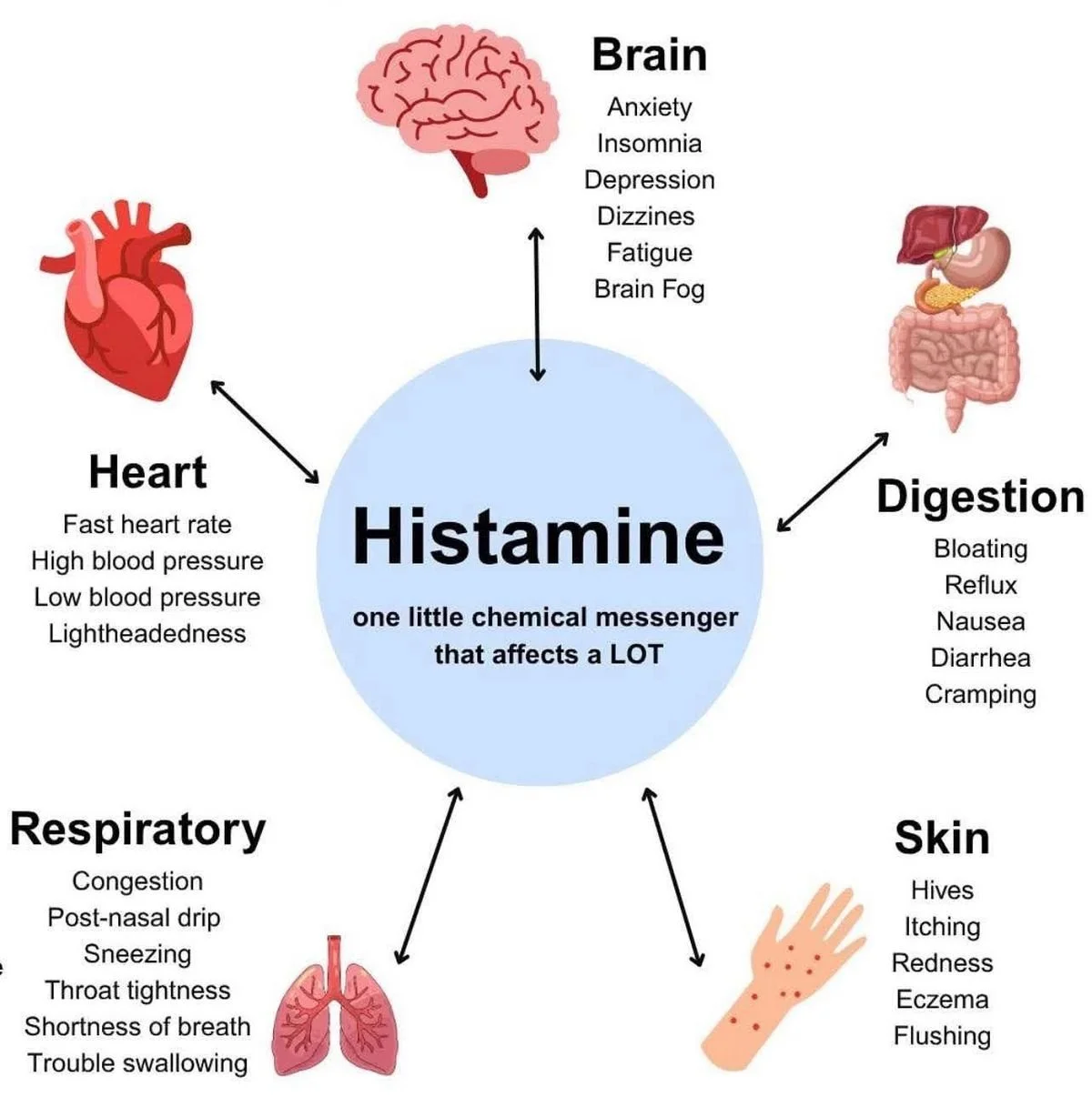
Histamine is often talked about in the context of seasonal allergies, but in functional medicine, we look at histamine as a whole‑body signaling molecule that can quietly drive headaches, anxiety, digestive issues, skin flares, and hormone imbalances when it builds up faster than the body can clear it.
If you’ve ever felt like your symptoms come in waves, like headaches after wine, stress, certain foods, or around your cycle, histamine may be the missing piece.
What Is Histamine (and Why It’s Not the Enemy)
Histamine is a natural chemical your body uses for:
Immune defense
Digestion (stimulating stomach acid)
Brain signaling
Regulating wakefulness and alertness
The issue isn’t histamine itself; the issue is histamine overload.
In functional medicine, we think in terms of balance: how much histamine is being produced or consumed versus how efficiently your body can break it down.
The Histamine “Bucket” Theory
Imagine your body has a histamine bucket.
Every day, histamine is added from:
High‑histamine or histamine‑liberating foods
Gut inflammation or dysbiosis
Stress and cortisol dysregulation
Estrogen dominance
Environmental allergens
Infections or immune activation
As long as your body can drain the bucket, you feel fine.
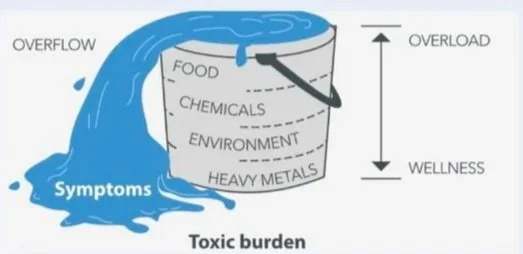
But when the bucket overflows, symptoms appear:
Headaches or migraines
Facial pressure or sinus pain
Anxiety or racing thoughts
Skin flushing or hives
Bloating, reflux, or diarrhea
Insomnia
The goal is not perfection; it’s lowering the load and improving drainage.
The Histamine–Headache Connection
Histamine is a potent vasodilator, meaning it widens blood vessels. When histamine levels rise too high, this vasodilation can trigger:
Tension headaches
Migraines
Sinus‑type pressure headaches
Histamine also interacts with neurotransmitters like serotonin and dopamine, which is why histamine headaches often come with:
Light or sound sensitivity
Nausea
Mood changes
This is why some people notice headaches after:
Wine or fermented foods
A stressful day
Poor sleep
Hormonal shifts (especially ovulation or before menstruation)
MTHFR, Methylation, and Histamine
One of the most overlooked connections is methylation.
Histamine is broken down in part by an enzyme called HNMT, which relies on proper methylation to function well.
If someone has:
An MTHFR gene variant
Poor methylation due to nutrient deficiencies
Chronic stress drains methyl donors
They may struggle to clear histamine efficiently, even if their diet is “clean.”
Common signs this may be an issue include:
Sensitivity to supplements or medications
Anxiety with B‑vitamins
Headaches after high‑histamine foods
Feeling wired but tired
Supporting methylation gently (not aggressively) can make a major difference in histamine tolerance.
How to Lower Histamine and Drain the Bucket
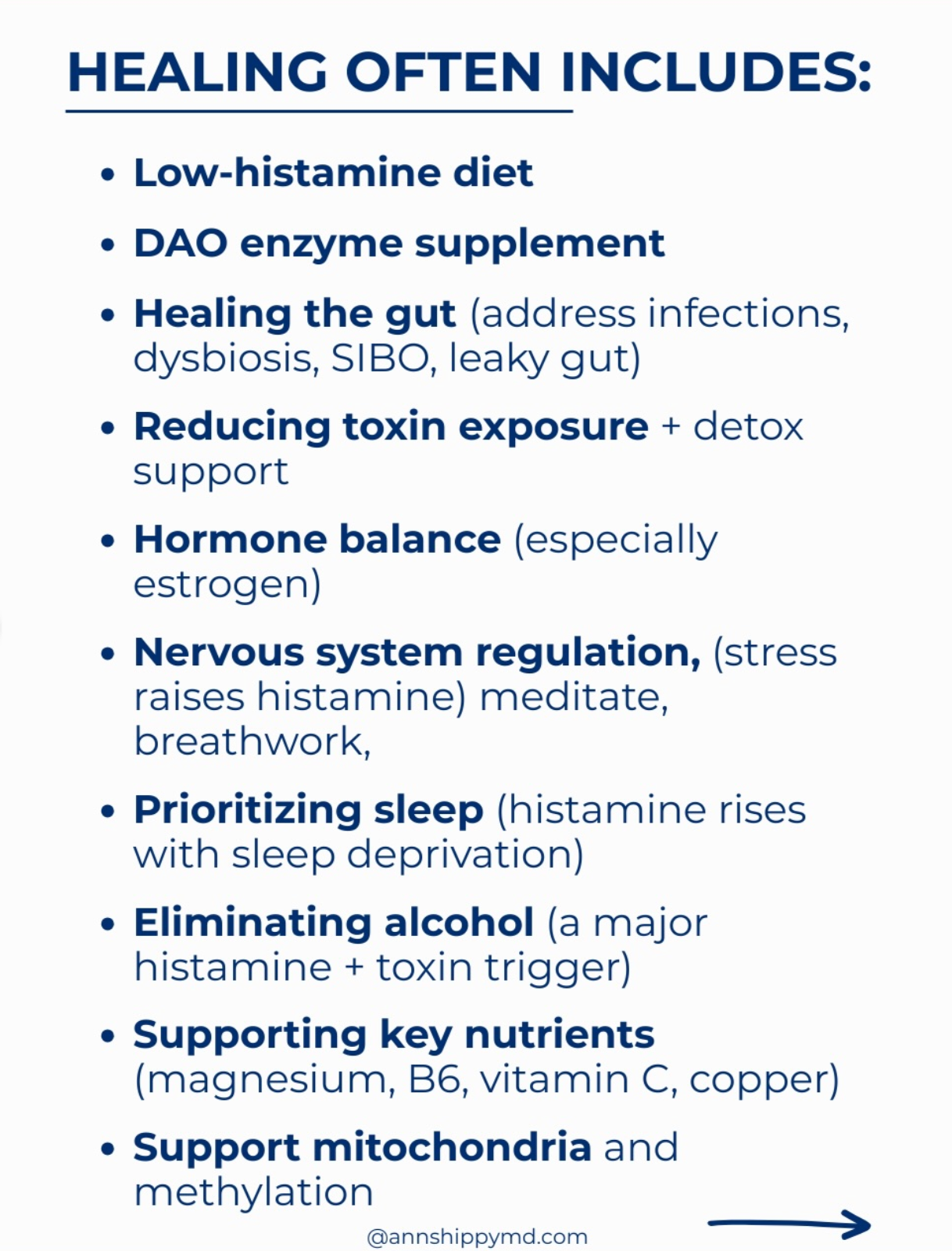
Functional medicine focuses on reducing inputs and improving clearance.
1. Reduce the Histamine Load (Temporarily)
This doesn’t mean forever; it means giving your system a break.
Common high‑histamine foods include:
Alcohol (especially wine)
Fermented foods
Aged cheeses
Processed or leftover meats
Vinegar‑heavy foods
Canned or smoked fish
Chocolate
A short‑term low‑histamine approach can calm symptoms while you work on root causes.
2. Heal the Gut
Up to 70% of histamine is produced or regulated in the gut.
Key contributors include:
Dysbiosis
SIBO
Intestinal permeability
Chronic infections
Supporting the gut lining and microbiome often lowers histamine more effectively than any antihistamine ever could.
3. Support Histamine Breakdown
Nutrients that support histamine clearance include:
Vitamin C
Vitamin B6
Copper (balance matters)
Magnesium
For some people, targeted support for DAO activity may also be helpful, especially for food‑related symptoms.
4. Support Methylation (Gently)
This is especially important for those with MTHFR variants.
Instead of high‑dose methyl supplements, functional medicine often starts with:
Adequate protein
Natural folate from foods
Riboflavin (B2)
Nervous system regulation
More is not always better; balance is key.
5. Regulate Stress and Nervous System Tone
Stress increases histamine release.
Practices that calm the nervous system help drain the bucket:
Deep breathing
Gentle movement
Consistent sleep
Emotional safety and regulation
Histamine intolerance is not just biochemical; it’s neuro‑immune.
The Takeaway
Histamine issues are rarely about one food or one supplement.
They’re about:
Load vs. capacity
Genetics + environment
Gut health + nervous system balance
When you lower what’s filling the bucket and improve your body’s ability to drain it, symptoms like headaches often resolve naturally, without living in fear of food.
Healing histamine sensitivity is not about restriction. It’s about resilience.
References
Maintz, L., & Novak, N. (2007). Histamine and histamine intolerance. The American Journal of Clinical Nutrition, 85(5), 1185–1196. https://doi.org/10.1093/ajcn/85.5.1185
Schwelberger, H. G. (2010). Histamine N-methyltransferase (HNMT) and its role in histamine metabolism. Inflammation Research, 59(2), S27–S28. https://doi.org/10.1007/s00011-009-0141-4
Comas-Basté, O., Latorre-Moratalla, M. L., Sánchez-Pérez, S., Veciana-Nogués, M. T., & Vidal-Carou, M. C. (2020). Histamine intolerance: The current state of the art. Biomolecules, 10(8), 1181. https://doi.org/10.3390/biom10081181
Schnedl, W. J., Enko, D., Mangge, H., & Forster, F. (2019). Diamine oxidase supplementation improves symptoms in patients with histamine intolerance. Food Science & Nutrition, 7(9), 2871–2878. https://doi.org/10.1002/fsn3.1130
Gazerani, P. (2020). Migraine and histamine: Is there a link? Frontiers in Neurology, 11, 532. https://doi.org/10.3389/fneur.2020.00532
International Headache Society. (2018). The International Classification of Headache Disorders (3rd ed.). Cephalalgia, 38(1), 1–211. https://doi.org/10.1177/0333102417738202
Miller, A. L. (2008). The methylation, neurotransmitter, and antioxidant connections between folate and depression. Alternative Medicine Review, 13(3), 216–226.
Ziemann, M., & Gronow, D. (2021). The role of methylation in histamine degradation and neuroimmune balance. Journal of Nutritional Biochemistry, 92, 108626. https://doi.org/10.1016/j.jnutbio.2021.108626
Institute for Functional Medicine. (2020). Food sensitivities, histamine, and the gut-immune connection. https://www.ifm.org